Searching "Karate Near Me"? Here's How to Choose Well
When you type "karate near me" into your phone, you'll get a map full of pins and a lot of look-alike websites. The hard part isn't finding a school. It's finding the right one.
A quality dojo has credentialed instructors who teach on the mat, transparent pricing, and a real curriculum that covers kihon (basics), kata (forms), and kumite (sparring). The best schools let you try a class before you commit a single dollar. Get those things right and you'll build discipline, confidence, and genuine fitness as you progress through the belt ranks.
This guide walks you through what to look for, the red flags to avoid, and what a first class actually feels like. If you want the bigger picture of the styles and programs we teach, start with martial arts at JMAA. And if you're an East County family, we'll show you why so many of your neighbors train with us right here in El Cajon.
Why Karate Builds Discipline, Confidence, and Real Fitness
Step onto the mat and you're entering a system designed to reshape how you think, move, and carry yourself. Structured repetition and clear expectations build disciplined habits you'll carry into school, work, and home.
That composure isn't just a feel-good idea. Emotional regulation and self-control are closely tied to life satisfaction, so the steadiness you train under pressure shows up everywhere else in your life. Self-esteem and confidence consistently rank among karate's biggest psychological payoffs, and as your skill grows, so does your fitness, creating a cycle where every win fuels the next.
Training also sharpens how you respond to stress, reduces impulsiveness, and strengthens the willpower that helps you follow through. A systematic review of nine studies found that karate supports discipline and self-control through structured routines, clear rules, and the steady internalizing of values. Add in the cardio demands of sparring and the strength work in every session, and you've got measurable, long-term fitness on top of the mental gains.
What Happens in a Typical Karate Class?
Before you commit to any school, you'll want to know what a class actually demands. Most sessions run about an hour to ninety minutes and follow a consistent structure no matter your belt. Students usually show up 10 to 15 minutes early to stretch and get their head in the right place for training.
Class opens with a dynamic warm-up: light jogging, arm circles, leg swings, then core work and hip-loosening movement to get your body ready.
Next come kihon drills, the foundation of everything. You'll practice punches, kicks, and blocks with deliberate repetition, moving from stationary techniques to combinations as your form sharpens.
Kata follows, where you run pre-set sequences of technique against imaginary opponents. As you advance, you'll move into kumite, the structured sparring that teaches distance, timing, and how to read an opponent. Every class closes with cool-down stretches and a formal bow.
Karate Classes for Kids, Teens, and Adults
Once you understand the structure of a class, the next step is finding the right program for your age. Each one targets a different stage of growth through a progressive, age-appropriate curriculum.
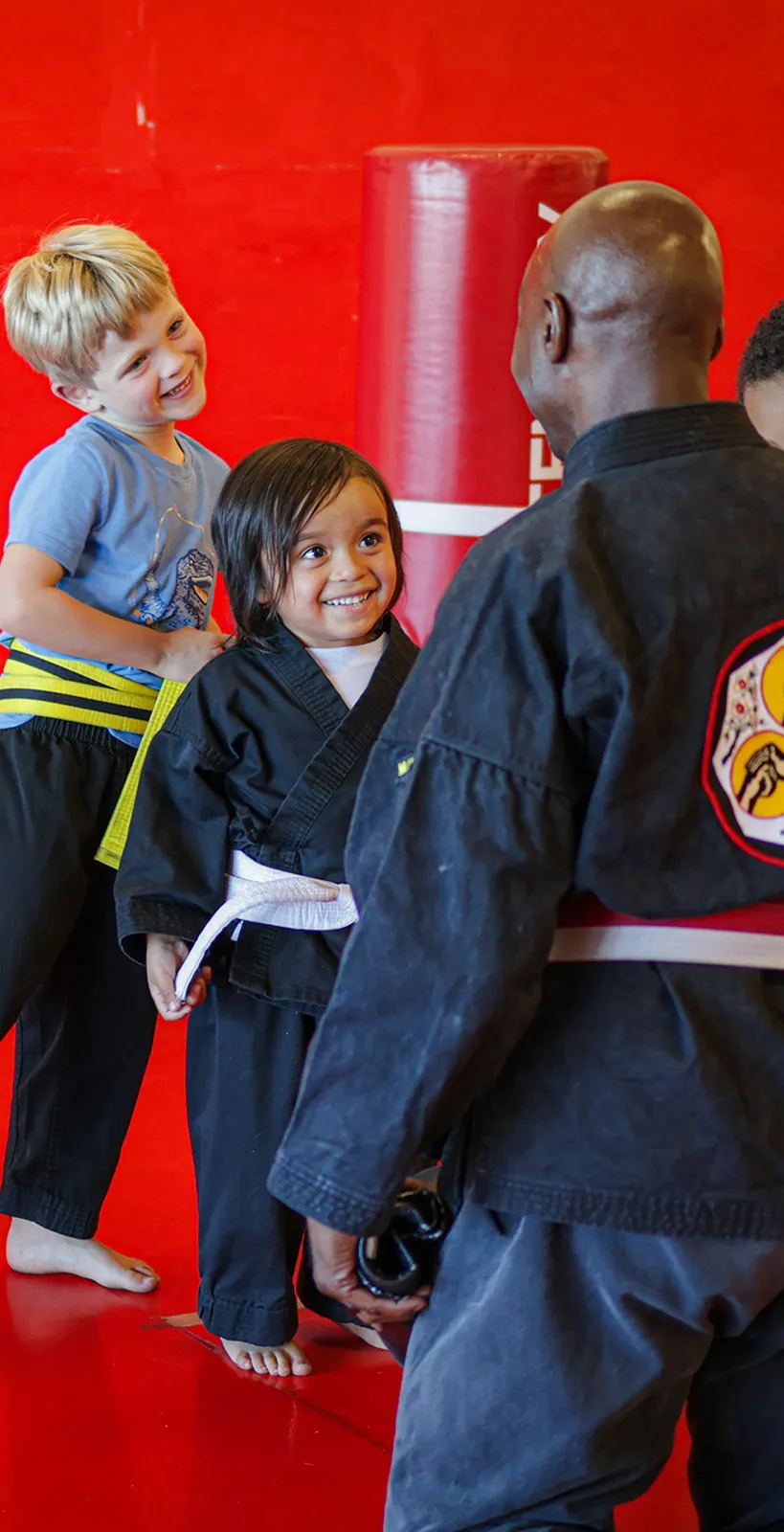
Kids build foundational movement, coordination, and motor skills, and you'll often see the payoff in better focus, self-discipline, and even schoolwork. At JMAA, our youngest students start in Kosho Cubs (ages 3 to 5), where martial arts concepts are taught through games and play that fit how little ones actually learn. From there, kids classes for ages 6 to 12 layer in real technique and responsibility.
Teens develop confidence and independence through instruction that balances technical discipline with personal growth. Training builds perseverance, integrity, and self-control, and those wins carry far beyond the dojo. Confidence becomes durable because your teen keeps proving to themselves they can handle hard things. Our teen martial arts program is built for exactly that stage.
Adults start in beginner-friendly classes with no prerequisites at all. You'll build functional fitness, strength, and conditioning at whatever level you walk in. Certified instructors introduce technique progressively, keeping training safe while you develop real skill and control. Explore adult martial arts at JMAA when you're ready to step on the mat.
Belt Progression: How You Advance in Rank
The belt system gives you a clear path from beginner to advanced practitioner. You'll start at white belt and work through yellow, orange, green, blue, purple, and brown before earning your black belt. Each color marks growing technical skill and a deeper grasp of the fundamentals.
Once you reach black belt, Dan rankings govern your advancement. Expect about a year at 1st Dan before testing for 2nd Dan, two years for 3rd Dan, and progressively longer stretches at higher ranks. Age requirements apply too, and for the highest Dan ranks, certain organizations require testing at their headquarters in Tokyo, the only place authorized to evaluate those levels.
Kyu gradings (the colored-belt tests) usually happen a couple of times a year, while Dan examinations are less frequent and run through authorized testing centers with specially trained examiners. The exact pace varies by school and style, which is one more reason to ask any dojo to walk you through their advancement path before you join.
What to Look for in a Karate School Near You
Finding the right school takes more than a quick map search. You'll want to weigh instructor credentials, facility quality, pricing transparency, curriculum, and culture before you commit your time and money. Here's a simple checklist:
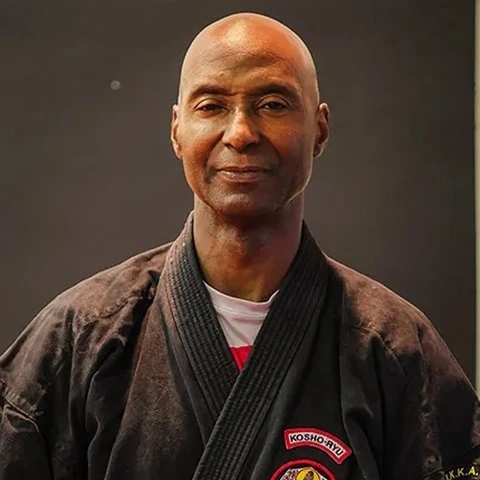
- Experienced, on-the-mat instructors. Your head instructor should have years of training and real credentials, and should teach on the mat, not run things from an office. At JMAA, Sigung Darryl James holds a 6th-degree black belt in Kajukenbo and a 3rd-degree in Kosho-Ryu, with 36+ years of experience and a USA Martial Arts Hall of Fame honor.
- Transparent pricing. Tuition, testing fees, and equipment costs should all be disclosed upfront, with no surprises.
- No long, locked-in contracts. Look for a trial period and the freedom to train month to month.
- The chance to watch a class. Any school worth joining will let you come watch or try a class before you sign anything. If a dojo won't, cross it off.
- A structured curriculum. Kihon, kata, and kumite with clear benchmarks for advancement.
- A healthy culture. Watch how students treat each other. Discipline, respect, and camaraderie tell you what a school is really made of, and long-term student retention confirms it.
For East County families, we make every one of these easy to check in person. Come watch a class, meet the instructors, and see the culture for yourself before you decide.
Red Flags to Avoid When Choosing a Karate School
Knowing what makes a strong dojo is only half the job. You've also got to spot the warning signs that reveal a weak school before you've spent months and hundreds of dollars finding out the hard way.
Be wary of high-pressure contracts, guaranteed black belt timelines, and promotions tied to payment instead of skill. Be cautious of schools where unsupervised teenagers run classes, where sparring is missing, or where the curriculum skips kihon, kata, or kumite. If an instructor can't explain their teaching philosophy or gets defensive when you ask honest questions, walk away. A good school welcomes scrutiny because its standards hold up.
Be equally careful of dojos that hand black belts to very young children, which often signals watered-down standards. You're investing in discipline you'll carry for life, so don't settle for flashy techniques over solid fundamentals and real self-defense. Demand transparency in fees, credentials, and advancement before you commit.
No Contracts, No Hidden Fees: What Fair Pricing Looks Like
Now that you can spot the red flags, you're ready to recognize fair pricing and ask for it. Costs vary by region and by how often you train, but the principles stay the same.
A reasonable monthly tuition reflects your class frequency, and a registration fee should be modest and clearly explained. Watch for what's billed separately, like belt testing, private lessons, or annual organization dues. None of those are "hidden" as long as the school tells you upfront. Family and multi-student discounts are common and worth asking about.
The biggest green flag of all: a free trial. Most reputable schools let you experience real classes before you commit a single dollar. At JMAA, we keep pricing straightforward and we'd rather you try a class first than guess from a price sheet.
How to Get Started With Your First Karate Class
Walk into your first class with a clear plan and you'll skip the uncertainty that stops most beginners at the door. Wear simple athletic clothing. You won't need a gi or special gear on day one.
Before you go, call the school with your name, age, and any experience. Ask for a trial class and a quick tour, and watch how instructors teach on the mat. Your first session usually covers a light warm-up, dynamic stretching, and foundational movement shown at a controlled pace. You'll practice basic stances, blocks, and punches through repetition, with no sparring or contact. Focus on etiquette, listen to corrections, and let each technique sink into muscle memory.
Flexible Schedules and Beginner-Friendly Classes
Whether you're juggling a demanding job or a full family calendar, most adult programs offer two to three classes a week with morning and evening options that fit real life. Month-to-month memberships keep the pressure off so you train on your terms.
You don't need any prior experience to step onto the mat. Beginner-focused sessions break down the foundations, like stances, strikes, and blocks, while building discipline and respect from your very first day. Instructors adapt to your ability so you progress steadily alongside students of every rank, and classes welcome ages thirteen through senior adults at every fitness level. A free trial period lets you feel all of this firsthand before you commit.
Why East County Families Choose JMAA in El Cajon
If your "karate near me" search keeps pointing you toward El Cajon, here's what sets us apart. James Martial Arts Academy opened in 2010 and now serves 500+ East County families. We teach Kajukenbo and Kosho-Ryu under Sigung Darryl James, a 6th-degree Kajukenbo black belt with 36+ years on the mat.
We check every box on the list above: experienced instructors who teach in person, a structured curriculum, transparent pricing, no high-pressure contracts, and a culture built on respect. Programs run from preschoolers through adults, so the whole family can train under one roof.
The same discipline you build in karate shows up in every part of your life. Confidence grows when you've earned each belt through real effort. And you're searching for a school right now for a reason. You're ready. Schedule your free trial class, step onto the mat, and see what structured martial arts training can unlock in you and your family.
That’s exactly what you’ll find at our karate school in El Cajon.