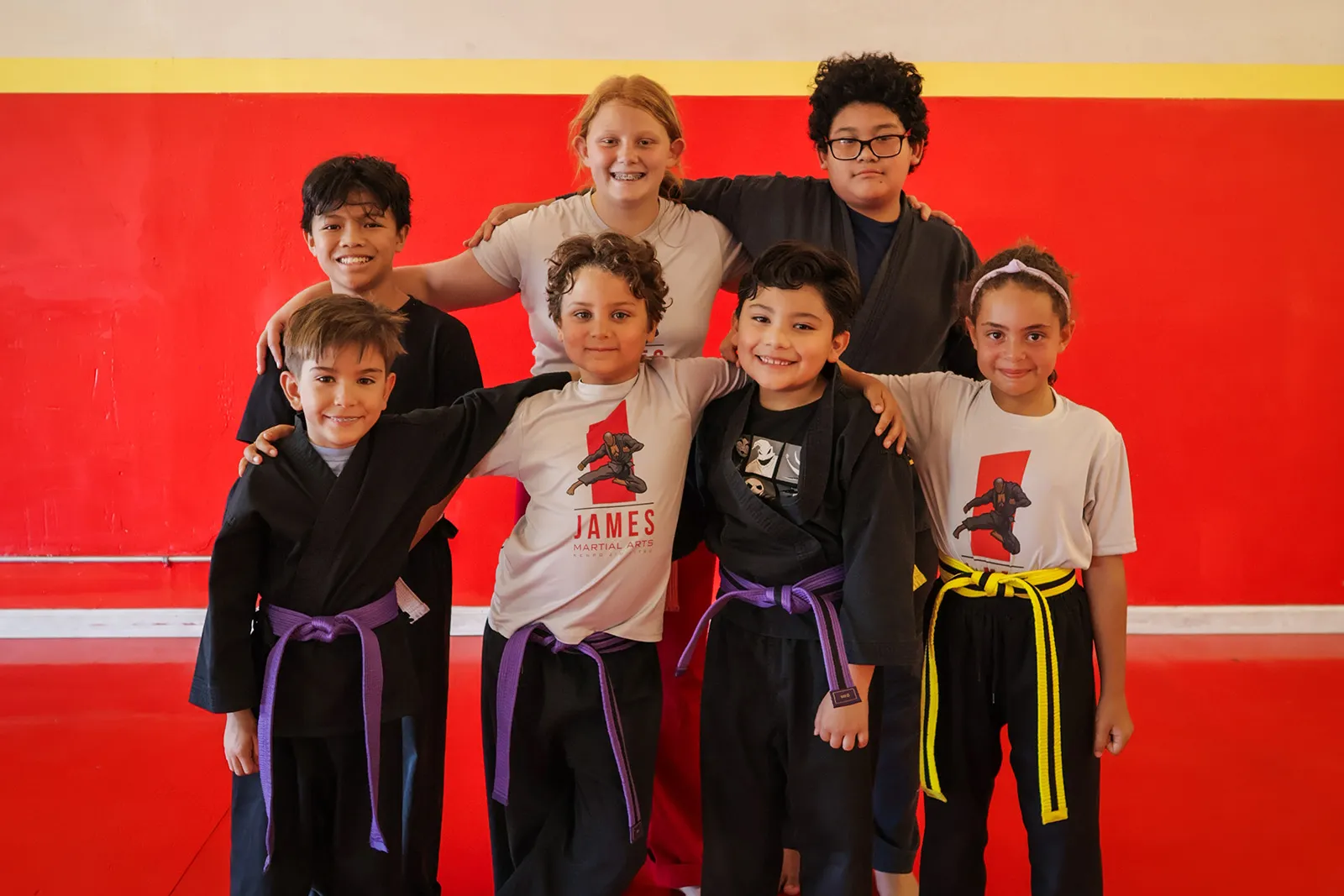
El Cajon · Ages 10 to 12 · Pre-Teen Martial Arts
Tigers don't back down.
Preteen Martial Arts Classes in El Cajon
Where Kids Find Out What They're Made Of
Real training for the years everything changes. Taught by one Hall of Fame chief instructor who knows every child by name.
The Old Way
Activities that entertain, but don't prepare them.
Middle school represents the most socially complex years of a young person's life, team sports teach tactics, not how to navigate those pressures.
Academic pressure alone can't build the emotional regulation and coping skills your pre-teen needs right now.
Screen time and passive entertainment give temporary relief from social anxiety, they don't solve it.
Without a structured challenge with earned milestones, pre-teens have no way to prove their own capability.
The identity formed in these years follows them into adulthood. It matters what you do with them.
What Changes in 90 Days
"I Don't Know Who This Kid Is", What Pre-Teen Training Actually Produces
The 10–12 window is uniquely powerful for character formation. These are the changes parents describe after three months of consistent training.
They Handle Social Pressure Differently
Peer pressure, social exclusion, and the constant social navigation of middle school, a student with genuine confidence and a calm internal anchor handles all of it differently. We build that anchor.
They Have Something to Be Proud Of
Earned belts and advancement milestones give pre-teens a visible record of their own capability. When everything else in their world feels uncertain, this is solid ground.
They Become Someone Younger Students Look Up To
We intentionally involve advanced students in teaching foundations to newer ones. Your pre-teen will discover what it feels like to be a leader, and they will rise to meet it.
Their Focus Sharpens Across the Board
The structured attention-building on the training floor transfers. Pre-teens who train here regularly report improved academic performance, because discipline is a transferable skill.
They Can Defend Themselves, Verbally and Physically
Self-defense at this age is as much about verbal confidence and situational awareness as it is physical skill. Your child will learn both, and the knowledge changes how they carry themselves in every room.
They Develop Real Goal-Setting Discipline
The belt system teaches your pre-teen to identify a goal, sustain effort over months, and feel the specific pride of earning something that required genuine sacrifice. This is college-application material.
What the Training Covers
"Is This Challenging Enough for a 10-Year-Old Who's Done Sports Before?"
Yes. The pre-teen curriculum covers advanced Kajukenbo technique, Kosho-Ryu principles, leadership foundations, and real self-defense application. This is not beginner material scaled up.
-
Advanced Kajukenbo Combinations
Multi-technique combinations requiring coordination, timing, power, and spatial awareness. Demanding enough to hold the attention of a capable 12-year-old, structured enough for a beginner 10-year-old.
-
Kosho-Ryu Principles & Philosophy
The classical Japanese system introduces spatial awareness, circular movement, and the concept of training the mind alongside the body. Pre-teens respond to depth when it is presented correctly.
-
Controlled Sparring & Application
Supervised partner work applying learned technique under realistic (but safe) conditions. Confidence built in drills is tested here, and made real.
-
Self-Defense & Situational Awareness
Recognizing dangerous situations, setting verbal boundaries, creating exit opportunities. Practical and age-appropriate, skills that serve them for the rest of their lives.
-
Peer Leadership & Mentoring
Advanced students assist in teaching newer students. Responsibility is earned, not assigned. This is where leaders discover themselves.
-
Mental Discipline Under Pressure
Maintaining technique, composure, and focus when tired, frustrated, or challenged. The skill that transfers from the training floor to the classroom to the workplace, decades from now.
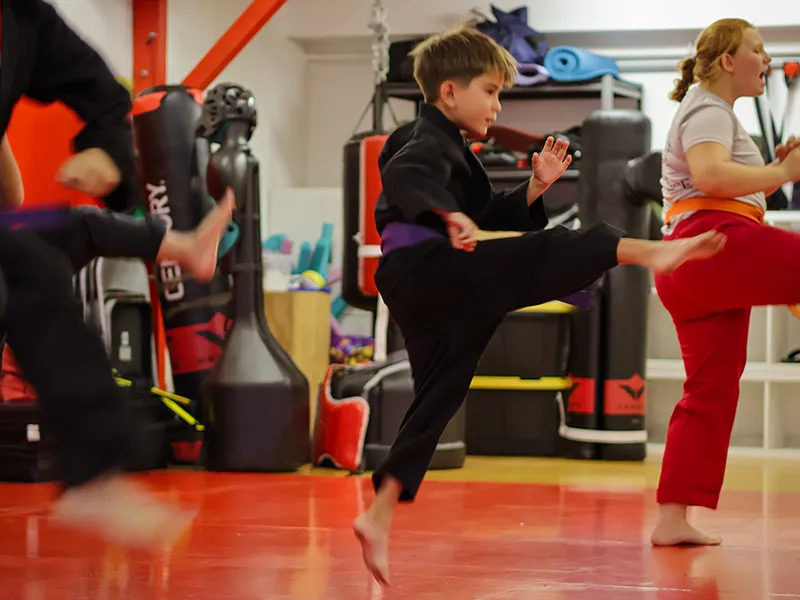
Why This Academy, Not That One
"Every Class Felt Like Babysitting With a Uniform"
Pre-teens can tell the difference between genuine challenge and going through the motions. Most martial arts classes at this age feel like the latter. Here is what makes James Martial Arts Academy different for this age group specifically. See the academy that built the Tigers program.
"The Instructor Treated Them Like Little Kids"
Sigung James adjusts his instruction to developmental stage. Pre-teens receive respect, direct feedback, and genuine challenge, not scaled-down children's drills or watered-down adult content. Meet the Tigers coaching staff.
"They Were Bored After Three Weeks"
The belt system, leadership pathway, and expanding curriculum give pre-teens a long runway of progression. There is always a next goal. There is always something harder to work toward. Boredom is not available here.
"The Class Had 10-Year-Olds and 14-Year-Olds Together"
Developmental differences between a 10-year-old and a 14-year-old are significant. Our Pre-Teen class is built for ages 10–12 specifically, the technique level, social dynamics, and instruction style match this window.
"There Was No Real Discipline, Just Fun"
Fun and discipline are not opposites at James Martial Arts Academy. The structure is real. The standards are real. The respect is non-negotiable. Pre-teens often tell us this is the one place in their week where they know exactly what is expected of them, and they find that steady.
Real Families · Real Outcomes
Pre-Teen Students, Before and After
Read what Tigers parents notice at home after class across our full reviews.
"My son is more focused, more respectful, and actually listens the first time. His teachers have noticed it too. Sigung James is the real deal."
Pre-Teen Class · El Cajon · Google Review
"He started as the quietest kid in the class. Six months later he was helping teach the warm-up. That transformation came from Sigung James seeing him and refusing to let him disappear."
Pre-Teen Class · Google Review
"James Martial Arts Academy gave my daughter a community of peers who actually push each other to improve. That is rare and we are grateful for it."
Pre-Teen Class · El Cajon
What's included at James Martial Arts Academy for $180/month
- Sigung Darryl James personally on the floor every class, 6th-degree Black Belt in Kajukenbo, 3rd-degree in Kosho-Ryu, 36+ years on the training floor, USA Black Belt Hall of Fame inductee. Not a junior instructor with a weekend cert.
- Four integrated martial arts taught under one roof, Kajukenbo for practical capability, Kosho-Ryu Kenpo for awareness and de-escalation, Kickboxing for striking and conditioning, Kung-Fu for fluidity and tradition. Most schools teach one art; here you train across all four.
- Age-separated programs, your 4-year-old isn't training next to a 13-year-old. Real per-age curriculum, real per-age class structure.
- Small class sizes, we know your child's name by class 2. We know what they're working through and what makes them light up.
- Locally owned and operated since 2010, same instructor on the training floor every day. No franchise rotation. No corporate dilution.
- Real belt progression, earned through demonstrated mastery, not handed out for showing up. Belt testing fees ensure tests are taken seriously, not treated as participation badges.
- No surprises, $0 registration fee. No equipment bundles. No contract pressure. Pricing is exactly what we say it is.
- Tigers class targets the middle-school window, emotional control under pressure, leadership development, verbal self-defense. Built for the exact age where it matters most.
Industry comparison: comparable programs at established East County schools typically run $150–$250/month. At $180/month with no registration fee, James Martial Arts Academy is mid-market priced for top-tier instruction.
Related Resources
What's Next for Your Pre-Teen
As preteens age out of the Tigers program, they progress into our teen martial arts for ages 13 to 17. Younger siblings can join the Leopards kids program for younger siblings. The curriculum draws from authentic Kajukenbo training, taught by Sigung James and the instructor team. Review preteen Tigers class times, or claim your preteen free first week. You can also see all six age-structured programs, explore our El Cajon karate academy, or read our preteen martial arts FAQ. El Cajon residents and families across the East County area drive to our flagship dojo location — family-owned since 2010.
Have a preteen with autism, ADHD, or sensory needs? Our guide on Martial Arts for Special Needs covers how the same four-step method adjusts to your child's pace.
Questions & Answers
Questions Every Parent of a Pre-Teen Asks
My child has done other martial arts before. Will this be a challenge?
Yes. We assess every new student individually at the trial class. If your child has prior training, Sigung James will evaluate and place them at the appropriate level. Students with experience often find the depth of Kajukenbo and Kosho-Ryu particularly engaging.
Is sparring required?
Controlled partner work is part of the curriculum, but full sparring is introduced gradually based on individual readiness. Safety comes first. No student is pushed into contact situations before they are technically and mentally prepared.
My child is going through a difficult phase socially. Will this help?
Consistently, yes. The structure, belonging, and earned confidence of martial arts training has helped many pre-teens navigate difficult social periods. The James Martial Arts Academy community is specifically a positive, motivated peer group, different from what most pre-teens encounter at school.
How does this work with a busy homework and activities schedule?
Classes run Monday–Thursday evenings and Saturday morning. Most students attend 2–3 times per week, which takes roughly 90 minutes total. Parents consistently report that trained students are more efficient with homework, the focus built on the training floor carries over.
Will the college application process benefit from this?
Directly. Years of earned belt advancement, peer mentoring experience, and demonstrated discipline is genuine leadership material, not a checkbox activity. Admissions officers can distinguish between participation and earned achievement.
What if my child wants to quit after a month?
The trial is free, no obligation. If they continue and want to stop after a month, we'll talk. In our experience, the students who most want to quit in the first month are often the ones who stay the longest, because the initial resistance is exactly what the training addresses.