When parents search for "teen MMA classes," they're usually after one thing: a program that builds real confidence, fitness, and discipline in a safe, structured setting for ages 13 to 17. The good news is your teen doesn't need any prior experience or a specific fitness level to start. At Teen Martial Arts training at JMAA, your teen trains in well-rounded Kajukenbo and Kosho-Ryu, a striking-and-grappling system that covers every range the way mixed martial arts does, taught by an instructor who specializes in teens. Here's what a strong teen program looks like and how James Martial Arts Academy delivers it for East County families.
What Teen Martial Arts Training Actually Looks Like
A quality teen program is built around structured, supervised sessions that blend striking and grappling into one complete skill set. At JMAA, your teen learns Kajukenbo, a system that draws from boxing, karate, and grappling, so they develop punches, kicks, takedown defense, and ground control all in one curriculum. Every drill is adapted to your teen's developmental stage, not borrowed from an adult fight team.
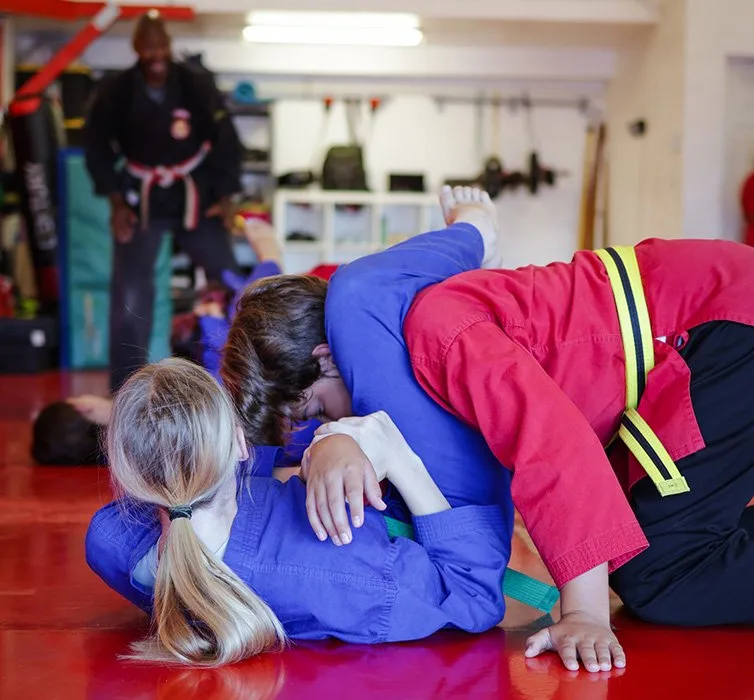
Training follows a clear progression. The early stages establish movement patterns, mindset, and technical basics. As foundations get solid, your teen moves into controlled, supervised partner work where they apply what they've learned at a safe intensity. Each stage carries its own goals and milestones, so your teen always knows what they're working toward and why it matters.
The environment is ego-free by design. Mistakes are how teens grow, and coaches treat them that way. Confidence is built right alongside skill, so your teen gains genuine self-defense ability across striking and grappling while developing focus, discipline, and respect for their training partners.
Who Can Join Teen Martial Arts Classes?
Whether your teen has trained for years or has never thrown a single punch, teen classes at JMAA welcome them starting at age 13. No prior experience, athletic background, or specific fitness level is required. The program meets each student exactly where they are and builds strength, coordination, and flexibility step by step.
JMAA's Dragons program serves ages 13 through 17, creating a focused setting where young martial artists train alongside peers at a similar stage of growth. Your teen might be after self-defense skills, a confidence boost, a structured activity with real discipline, or simply a healthier outlet than another hour of scrolling. All of those goals fit. The training environment emphasizes respect and self-control, so teens learn to use their skills responsibly.
Families often train across different programs too, which makes martial arts a shared commitment rather than another drop-off activity. If your teen is ready to start, there's a place for them.
From Beginner to Confident: How Progression Works
Because every teen develops at a different pace, a strong program builds skills on a solid foundation before adding challenge. At JMAA, that means starting with movement fundamentals, correct striking mechanics, and takedown basics. Coaches deliberately slow the process down to build sound technique from day one, because rushing intensity is how teens get hurt or discouraged.
From there, your teen moves into controlled, closely supervised partner work. They apply their foundational skills with measured contact while developing timing, positioning, and strategy. Advancement depends on demonstrated competency, not just time on the mat, so the milestones your teen earns actually mean something.
Beyond technique, this kind of progression builds discipline, accountability, and resilience that carry into every area of your teen's life, from the classroom to friendships to how they handle setbacks.
The Skills Your Teen Will Build
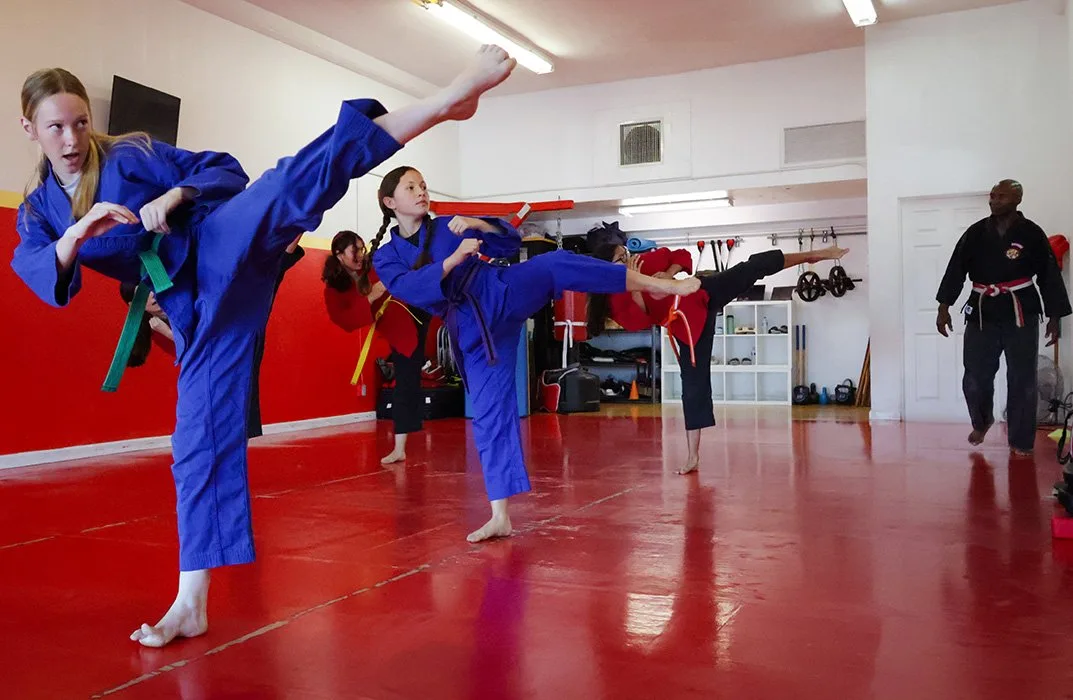
A well-rounded program teaches your teen to fight smart in every range, then ties it all together. Striking sharpens hand combinations, defensive head movement, kicks, and clinch work. Grappling builds takedown execution, defense, and the ground control that keeps a teen safe if a confrontation ever ends up close.
Your teen won't drill these in isolation. They'll learn how each piece connects: striking flows into clinch work, clinch transitions to takedowns, and takedowns lead to ground control. That's the heart of Kajukenbo, and it's why JMAA's curriculum gives teens a complete, real-world skill set rather than a single trick.
This integrated approach develops body awareness, coordination, and conditioning at the same time, preparing your teen for whatever level of training they want to pursue down the road.
How Teen Martial Arts Builds Confidence, Fitness, and Focus
When your teen earns a new technique through months of drilling, repetition, and a few failures along the way, they build confidence no social media comment can shake. That self-assurance is rooted in proven competence, not outside validation, and it shows up in how they carry themselves.
The fitness comes built in. Each class develops strength, flexibility, and cardiovascular endurance across multiple muscle groups, and your teen builds sustainable habits that outlast a single sports season. Research shows youth martial arts programs produce statistically significant improvements in cardiorespiratory fitness, speed, agility, strength, flexibility, coordination, and balance.
Training sharpens focus too. Following sequential instructions, managing frustration after a failed attempt, and committing to belt progression teach delayed gratification and emotional regulation. Those skills transfer straight into academic performance and personal relationships. Partner drills also teach teens to cooperate and build genuine friendships with like-minded peers. You'll watch your teen develop discipline, respect, and stress-management tools that serve them well beyond the mat.
How a Good Program Keeps Teens Safe
Safety shouldn't be an afterthought, and at JMAA it's built into every layer of training. Instructors who specialize in teen programs recognize signs of discomfort before anything escalates, enforce clear "tap" and "stop" protocols during every partner drill, and keep constant supervision on the floor.
Age-appropriate progression keeps your teen developing at the right pace. Students demonstrate physical and emotional maturity before moving to contact work, full-power strikes are off the table, and protective gear is required during sparring. It's worth knowing that while headgear reduces head and face injuries, research shows it does not lessen concussion risk, which is exactly why controlled contact levels matter so much in a teen program.
Facility standards round it out. Mats are cleaned after every class, equipment is inspected regularly, and basic hygiene expectations are enforced. When you're trusting someone with your teen's development, those details are what turn intense training into a genuinely safe experience.
What to Look for in a Teen Program Near El Cajon
There are several places to train near El Cajon, so it helps to know what separates a strong teen program from the rest. Use these markers when you visit any school.
- Instructors who specialize in teens. Look for coaches with real experience teaching teenagers, not just a general martial arts background. The ability to adjust intensity for developing bodies matters deeply.
- Controlled contact and proper gear. A quality program prioritizes measured intensity, required protective equipment, and age-separated training groups over competitive pressure.
- Technique before intensity. Strong programs build skill progressively, making sure teens master fundamentals before contact increases.
- A trial class you can try first. A free trial lets your teen assess comfort and fit before you commit financially.
- A reputation built on care. Read parent reviews and look for a community that treats your teen's safety and growth as a genuine responsibility.
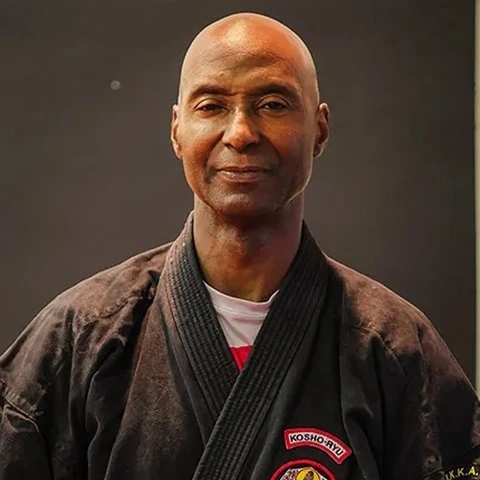
At JMAA, your teen trains in Kajukenbo and Kosho-Ryu with Sigung Darryl James, a 6th-degree Black Belt in Kajukenbo, USA Martial Arts Hall of Fame inductee, and former Fresno State athlete with more than 36 years of training. The Dragons program is built specifically for ages 13 to 17, so your teen learns alongside peers at a similar stage.
Real-World Skills Teens Carry Off the Mat
The benefits don't stay on the training floor. Your teen develops discipline through structured routines, sharpens mental focus that translates into academic performance, and builds emotional regulation through controlled partner work. They learn conflict resolution, including when to engage and, more importantly, when to walk away.
Partner-based training improves communication and fosters respect for others, which makes your teen a better teammate, student, and community member. The belt progression system provides measurable goals that reinforce perseverance, so your teen learns to embrace challenges, recover from setbacks, and celebrate achievements they actually earned. Those lessons in resilience and determination become tools they'll use throughout adulthood. For more on that, see how training supports focus and discipline for teens.
Ready When Your Teen Is
Your teen could spend another year perfecting their thumb-scrolling technique, or they could step onto the mat and build confidence, discipline, and fitness that actually carry into the rest of their life. You've seen what a strong program offers: structured training, safety-first coaching, and skills that matter. A free trial removes every barrier, so your teen can experience real instruction and structure before you commit a dollar. Schedule your free trial class and watch the change for yourself.