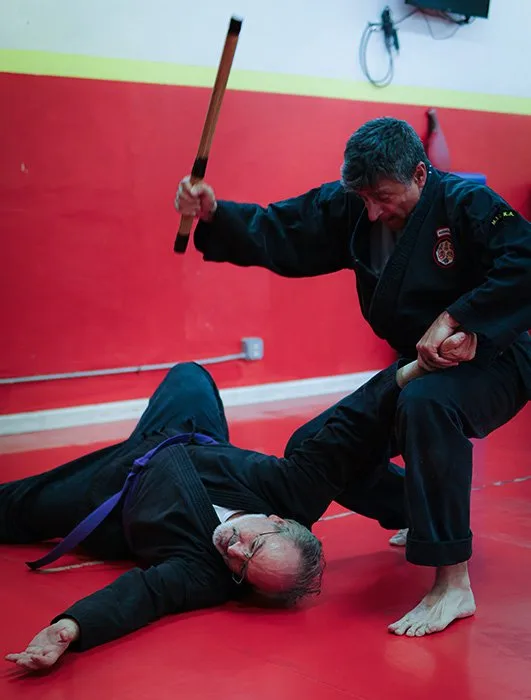
Before you walk into a single school, you'll want to get clear on a few things: what you're actually training for, which style fits your body and age, and what a real class feels like once the marketing fades. You'll also want to check an instructor's credentials, steer clear of long contract lock-ins, and ask straight questions about promotion costs. Most of all, you'll want a culture built on safety and community, not ego.
This checklist walks you through every step so you can start with confidence and skip the costly mistakes. If you're an adult in East County San Diego weighing your options, here's how to choose well, and how our Adult Martial Arts program measures up against each point.
Know Your Goals Before You Visit
Before you step onto any mat, pinpoint exactly what you're training for. Self-defense, fitness, competition, and personal growth each pull you down a different path, and clarifying your top priority keeps you committed when motivation dips.
If practical self-defense drives you, you'll want a school that trains realistic, full-body skills, not just choreographed forms. JMAA's Kajukenbo blends striking, grappling, and stand-up self-defense, so what you learn holds up in the real world.
If fitness is your goal, look for a program that builds conditioning while you learn. Adult classes here give you a full-body workout that beats another anonymous hour on a treadmill, and you'll actually look forward to showing up.
If you're drawn to the mental side, that matters just as much. Martial arts sharpen focus, build discipline, and grow the kind of quiet confidence that carries into your work, your family, and your community.
Define your "why" now. It'll anchor every decision that follows. And be cautious of any school that claims one discipline solves every problem. Honest programs are upfront about what their style does well and where it has limits.
Match Your Body Type and Age to a Style
Once your goals are clear, match your training to your body. Some arts reward reach and height, others reward leverage and timing. The good news: a well-rounded system gives you room to work to your strengths instead of fighting against them.
If you're over 40, prioritize technique over brute force. You want a program that lets you develop real skill without grinding your joints into the ground. JMAA's instructors scale intensity to the person in front of them, with controlled drills and sparring that meet you where you are.
Don't let limited flexibility or an old injury keep you on the sidelines either. Good coaching means modified positions and a gradual build, so your body opens up over time instead of getting forced. Your body isn't a barrier here. It's the starting point we build from.
The smartest move is an honest self-assessment of your strengths, your weak spots, and any past injuries, then a conversation with an instructor who'll tell you the truth about fit. That's the kind of straight answer you'll get at JMAA before you ever commit.
Take Trial Classes Like a Smart Shopper
A school's website can show you polished videos and glowing reviews, but a trial class shows you the truth. It strips away the marketing and reveals what your daily training will actually feel like, how instructors treat beginners, how they handle safety, and whether they teach fundamentals or just push the next upsell.
Before you book, confirm the class genuinely welcomes true beginners. Ask what's included, whether it's a single session or an intro week, and sort out the simple logistics like parking and any waiver.
Wear a clean athletic shirt and pocketless shorts. Skip zippers, jewelry, and anything baggy that could snag mid-drill. Ask ahead about protective gear so you're never pressured into a last-minute purchase at the counter.
Visit a couple of schools and judge them on the same criteria: student-to-instructor ratio, sparring safety, and whether the staff respect your timeline. A school that pushes you to sign that same day hasn't earned your trust. At JMAA, your free trial is exactly that, a real class with no pressure to commit before you're ready.
Verify Your Instructor's Credentials
Your safety and your progress depend on who's teaching you, which makes verifying credentials one of the most important steps in this whole process. Ask about an instructor's lineage and training history, and look for rank earned through recognized standards rather than self-awarded titles.
Check for current CPR and First Aid certification, liability insurance, and background checks. These aren't extras. They're the baseline of a professional who takes responsibility for everyone on the mat.
Watch for the red flags: self-anointed "grandmaster" titles, evasive answers about training history, or a story that changes from one conversation to the next. Legitimate instructors display their certificates proudly and welcome the questions.
This is one place JMAA invites scrutiny. The academy was founded in 2010 by Sigung Darryl James, a 6th-degree black belt in Kajukenbo and 3rd-degree in Kosho-Ryu with more than 36 years on the mat and a place in the USA Martial Arts Hall of Fame. You deserve a teacher whose qualifications hold up when you check them, so you can train with confidence.
Spot Contract Red Flags That Cost Thousands
Even a fully qualified instructor can't protect you from a contract built to drain your wallet. Watch for 12- to 24-month lock-ins that trap you financially when life shifts. Flexible, month-to-month options show a school is confident enough in its value to let you stay by choice.
Be skeptical of guaranteed black belt timelines. "Black belt in three years for $189 a month" signals belt-selling, not skill-building. You deserve rank you've earned, not progression that runs on a payment schedule. Rushed promotions also breed false confidence about handling real danger, which is the opposite of what you came for.
Ask direct pricing questions on day one. Schools that dodge contract details, or hand you a clipboard with the fine print buried on the back, are running a sales play. Ask plainly about testing fees, "black belt club" requirements, and promotion costs that can climb past a thousand dollars. You're investing in yourself, so make sure you're not funding someone else's sales quota.
Check Class Schedules That Fit Your Life
Before you sign anything, pull up the schedule and confirm it works with your real life. Find at least two time slots that fit, a primary and a backup, so one missed session doesn't break your momentum.
Look for classes clearly labeled beginner, intro, or fundamentals. That takes the guesswork out and gets you training faster. You'll also want to see a clear path from beginner to intermediate to advanced, so you know where the work is taking you.
If you're a parent, this matters even more. Back-to-back or simultaneous kids' and adult classes mean one trip instead of two. Families train together at JMAA all the time, which is part of why East County parents make it work for years.
Ask about make-up and transfer policies, too. Flexible make-ups and the freedom to switch time slots are what keep busy professionals consistent. Rigid booking rules with no alternatives should give you pause.
Evaluate Culture and Safety at Every School
A schedule that fits your calendar means nothing if the room itself puts you at risk or kills your motivation. During a trial, watch how senior students treat beginners. That single moment tells you more than any brochure.
Look for clean, sanitized mats, visible cleaning routines, and staff trained in CPR. Strong schools hold off on hard sparring until you're ready and enforce a tap-without-judgment rule, so you can learn without fear.
When the culture is healthy, you'll see it: a mix of ages and backgrounds, women training with confidence, and real friendships forming on the mat. Steer clear of any place that tolerates bullying or where instructors blur professional lines. That's the standard JMAA holds, a community in El Cajon built on safety, integrity, and respect, where you're supported instead of sized up.
Watch for Belt Promotion Scams
When a school ties your progress to your wallet instead of your skill, you're paying for decoration, not development. Honest promotions come from demonstrated ability, consistent mat time, and real testing, never a credit card. If a school promises a black belt in under two years or charges hundreds of dollars per test, keep looking.
Ask straight questions before you enroll: How are promotions decided? What does testing cost at each rank? What's a realistic timeline to black belt? Credible schools answer openly because they have nothing to hide, and that's the kind of transparency you'll find at JMAA.
Belt inflation isn't just a waste of money. It's dangerous. A student carrying rank they didn't earn develops a false sense of safety that fails them when it counts. You deserve training that builds genuine capability and standards that honor the discipline you're pursuing.
Your Next Step
Now you've got the checklist, so it's time to act. Don't rush into the first school you find. Take your time vetting instructors, contracts, and culture. You'll save money, avoid injuries, and land in a program that actually fits your life. Trust your gut, ask the hard questions, and commit to the process.
The best way to put this checklist to work is to walk in and feel it for yourself. Schedule your free trial class at JMAA in El Cajon and see how the academy stacks up against every point above, with zero pressure to sign on the spot. If you're brand new to all of this, our guide on martial arts for adults and our tips for adult beginners are a great place to start.